记忆方法
1、stir 出自 PIE *(s)twer-"旋转、打转":storm(暴风雨,本词空着:搅得天地旋转的天气)是同胞,turn(转)也在这条线上。原义不是"搅拌",是"搅动、不安"。
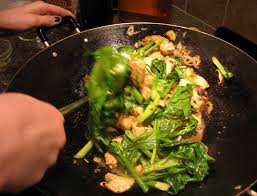
2、搅拌这个义是后起的:用勺子在锅里打转。stir-fry(炒菜,中式快翻锅)出现得很晚;stirred 双写 r。
3、比喻义三个:stir feelings(撩动情绪)、create a stir(引起轰动)、stir up trouble(惹事)。做名词时 a stir 就是"一阵骚动"。
2、搅拌这个义是后起的:用勺子在锅里打转。stir-fry(炒菜,中式快翻锅)出现得很晚;stirred 双写 r。
3、比喻义三个:stir feelings(撩动情绪)、create a stir(引起轰动)、stir up trouble(惹事)。做名词时 a stir 就是"一阵骚动"。
机器生成的内容难免有错,看到不靠谱的拆解请告诉我们
词族 · stir
中文词源
stir 搅动,搅拌,打动,激发
来自古英语 styrian,搅动,搅拌,来自 Proto-Germanic*sturjan,搅动,来自 PIE*stwer,旋转,转 动,词源同 storm,turn.引申诸相关词义。
英语词源
- stir
-
stir: [OE] The etymological connotations of stir are of ‘agitation’ and ‘disturbance’; the notion of ‘mixing a liquid with circular movements of a spoon or other implement’ is a secondary development. The verb goes back to a prehistoric Germanic *sturjan, whose only other living descendant is Norwegian styrja ‘make a disturbance’. It was formed from a base *stur-, which was probably also responsible for English storm.
=> storm - stir (v.)
- Old English styrian "to stir, move; rouse, agitate, incite, urge" (transitive and intransitive), from Proto-Germanic *sturjan (cognates: Middle Dutch stoeren, Dutch storen "to disturb," Old High German storan "to scatter, destroy," German stören "to disturb"), from PIE *(s)twer- (1) "to turn, whirl" (see storm (n.)). Related: Stirred; stirring. Stir-fry (v.) is attested from 1959.
- stir (n.)
- "commotion, disturbance, tumult," late 14c. (in phrase on steir), probably from a Scandinavian source, such as Old Norse styrr "disturbance, tumult," from the same root as stir (v.)). The sense of "movement, bustle" (1560s) probably is from the English verb.
权威例句
- 1. Stir the pork about until it turns white all the way through.
- 不停搅动猪肉,直到它全部变白为止。
- 2. Remove the bowl from the ice and stir in the cream.
- 从冰里把碗取出,搅入奶油。
- 3. Stir the sauce and pour it over the top.
- 搅拌调味汁,把它浇在上面。
- 4. Stir the parsley into the potatoes and serve at room temperature.
- 把欧芹拌入土豆里,放至常温后再端上桌。
- 5. Stir the custard occasionally to prevent a skin forming.
- 要不时地搅拌牛奶蛋糊,防止其表面结皮。