词族 · theorem
词形变化
中文词源
theorem 定理,法则
来自希腊语 theorema,看,观察,来自 theorein,看,观察,词源同 theory,-ema,名词后缀。后 古希腊数学家欧几里德借用该词用来指数学上的待证假设,引申词义定理,法则等。
英语词源
- theorem (n.)
- 1550s, from Middle French théorème (16c.) and directly from Late Latin theorema, from Greek theorema "spectacle, sight," in Euclid "proposition to be proved," literally "that which is looked at," from theorein "to look at, behold" (see theory).
权威例句
- 1. I agree with the theorem that the best defence is offence.
- 我同意最好的防御是进攻的理论.
- 2. His theorem can be translated into simple terms.
- 他的定理可用更简单的术语来解释.
- 3. By the corollary to Theorem 4.3, the origin is asymptotically stable.
- 根据定理4.3的推论, 原点是渐近稳定的.
- 4. There are a number of alternative formulations of the reciprocity theorem.
- 还有许多别的互易定理的公式.
- 5. Let us restate the assertions above as a theorem.
- 我们把上述的断言重新表述为一个定理.
词语辨析
【law, principle, theorem, fundamental】
这组词都有“原理、原则”的意思,其区别是:
law: 指一直公认的。陈述各种现象的条理或关系的公理或定理等。
principle: 普通用词,含义广。指作判断的基础或行动的普通准则;也指自然科学的规律。
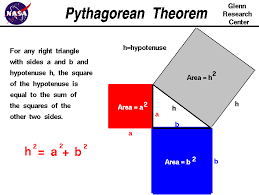
theorem: 多指经过推理或演算能得到证明的原理、定理或定律。
fundamental: 通常指原理、原则。
这组词都有“原理、原则”的意思,其区别是:
law: 指一直公认的。陈述各种现象的条理或关系的公理或定理等。
principle: 普通用词,含义广。指作判断的基础或行动的普通准则;也指自然科学的规律。
theorem: 多指经过推理或演算能得到证明的原理、定理或定律。
fundamental: 通常指原理、原则。