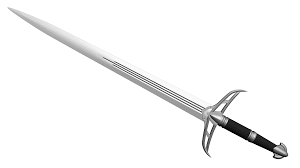
记忆方法
1、sword 的 w 不发音,读 /sɔːd/,跟 sawed(锯过)一个音。拼写是 s + word,看见 word 别忘了前面加 s、w 不出声。
2、它来自古英语 sweord,词根本义"砍、劈、刺"。这个词的最终来源学界还没有定论,不用在考证上费时间,抓住读音和不发音的 w 就够。
3、分清家伙:吃饭用刀 knife、叉 fork;sword 是武器里的剑、长刀。它还能指"武力、战争",by the sword 靠武力。
2、它来自古英语 sweord,词根本义"砍、劈、刺"。这个词的最终来源学界还没有定论,不用在考证上费时间,抓住读音和不发音的 w 就够。
3、分清家伙:吃饭用刀 knife、叉 fork;sword 是武器里的剑、长刀。它还能指"武力、战争",by the sword 靠武力。
机器生成的内容难免有错,看到不靠谱的拆解请告诉我们
词族 · sword
词形变化
中文词源
sword 剑,刀
来自古英语 sweord,刀,剑,来自 Proto-Germanic*swerda,刀,剑,来自 PIE*swer,砍,劈,刺。
英语词源
- sword
-
sword: [OE] Sword comes from a prehistoric Germanic *swertham, which also produced German schwert, Dutch zwaard, Swedish svärd, and Danish sværd. It is not known what its ultimate source was, although it has been speculated that it may have links with Old High German swerdo ‘pain’ – in which case its etymological meaning would be the ‘stinger, causer of pain’.
- sword (n.)
- Old English sweord, swyrd (West Saxon), sword (Northumbrian) "sword," from Proto-Germanic *swerdam (cognates: Old Saxon, Old Frisian swerd, Old Norse sverð, Swedish svärd, Middle Dutch swaert, Dutch zwaard, Old High German swert, German Schwert "a sword"), related to Old High German sweran "to hurt," from *swertha-, literally "the cutting weapon," from PIE root *swer- (3) "to cut, pierce."
Contrast with plowshare is from the Old Testament (Isaiah ii:4, Micah iv:3). Phrase put (originally do) to the sword "kill, slaughter" is recorded from mid-14c. An older Germanic word for it is in Old Saxon heoru, Gothic hairus "a sword."
权威例句
- 1. He pretended to scalp me with his sword.
- 他假装要用剑剥下我的头皮。
- 2. I parried, and that's when my sword broke.
- 我挡了一下,把我的剑挡断了。
- 3. Fame can be a two-edged sword .
- 名声是把双刃剑。
- 4. The sword and mace were favourite weapons for hand - to - hand fighting .
- 剑和狼牙棒是 肉搏战 的最佳武器.
- 5. The defeated general showed his submission by giving up his sword.
- 战败将军缴剑表示投降.