记忆方法
1、switch 最早是"细枝条",用来抽一下、把它拨到别处去——"一拨就转向",于是有了开关(switch)、转换(switch jobs)。记住"枝条一拨"的画面,义项全通。
2、sw- 一带都带"摆动":swing(摇摆)、swim(游泳)、swivel(旋转)都出自"弯、转、摆"这条老根。switch 的尾巴是 -tch(像 watch、match),读 /tʃ/,别写成 swich。
3、搭配:switch on/off 打开、关掉(电器);switch to 改用到、换成(switch to a new brand);切换频道也用 switch。辨析:change(改变)、exchange(交换)、shift(转移、换班)。美式说铁路 switch,英式说 points,读题时别当成两个东西。
2、sw- 一带都带"摆动":swing(摇摆)、swim(游泳)、swivel(旋转)都出自"弯、转、摆"这条老根。switch 的尾巴是 -tch(像 watch、match),读 /tʃ/,别写成 swich。
3、搭配:switch on/off 打开、关掉(电器);switch to 改用到、换成(switch to a new brand);切换频道也用 switch。辨析:change(改变)、exchange(交换)、shift(转移、换班)。美式说铁路 switch,英式说 points,读题时别当成两个东西。
机器生成的内容难免有错,看到不靠谱的拆解请告诉我们
词族 · switch
中文词源
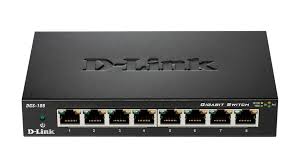
switch 开关,闸,转换器,转换,交换
最终来自 PIE*swei,弯,转,摆动,词源同 swing,swivel.引申诸相关词义。
英语词源
- switch
-
switch: [16] Switch originally denoted a ‘thin flexible twig’; it may have been borrowed from Middle Dutch swijch ‘bough, twig’. From the noun was derived the verb switch. This originally meant ‘beat with a switch’, but in the early 19th century the sense ‘bend or waggle to and fro like a flexible stick’ emerged, and this led on in the middle of the century via ‘divert’ to ‘turn off a train on to another track’ (the usage developed in American English, where the apparatus used for this is still known as a switch, as opposed to British English points).
By the end of the century this had broadened out to ‘connect or disconnect by pushing a contact to or fro’. The notion of ‘exchanging’ or ‘swopping’ did not emerge until as recently as the 1890s.
- switch (n.)
- 1590s, "slender riding whip," probably from a Flemish or Low German word akin to Middle Dutch swijch "bough, twig," or swutsche, variant of Low German zwukse "long thin stick, switch," from Germanic base *swih- (cognates: Old High German zwec "wooden peg," German Zweck "aim, design," originally "peg as a target," Zwick "wooden peg"), perhaps connected with PIE root *swei- (2) "to swing, bend, to turn."
The meaning "device for changing the direction of something or making or breaking a connection" is first recorded 1797. "The peg sense suits the mech(anical) applications" [Weekley], cognates: switchblade, and these senses in English may be a direct borrowing from those senses in Continental Germanic languages rather than a continuation of the "pliant wand" sense. The meaning "a change from one to another, a reversal, an exchange, a substitution" is first recorded 1920; extended form switcheroo is by 1933. - switch (v.)
- 1610s, "to strike with a switch," from switch (n.). Related: Switched; switching. The meaning "turn (off or on) with a switch device" is first recorded 1853 of trains on tracks, 1881 of electricity, 1932 of radio or (later) television. Sense of "shift, divert" is from 1860. Meaning "to change one thing for another" is recorded from 1919. Switch-hitter is 1945 in baseball slang; 1956 in the sense of "bisexual person."
权威例句
- 1. The spokesman implicitly condemned the United States policy switch.
- 发言人含蓄地谴责了美国政策上的转变。
- 2. Every time I switch on the TV, there's football. It's overkill.
- 我每次打开电视都是足球节目,真是受不了。
- 3. Prince Edward threw the switch to light the illuminations.
- 爱德华王子按动开关亮起彩灯。
- 4. Milk rounds are threatened as customers switch to buying from supermarkets.
- 随着顾客转而从超市购买牛奶,送牛奶的生意受到了威胁。
- 5. He flicked a light-switch on the wall beside the door.
- 他啪的一声打开了门边墙上的电灯开关。