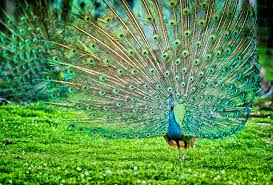
记忆方法
1. 浑身长满豌豆的公鸡, 因为孔雀的羽毛上布满了很多很像豌豆一样的图案。
看到不对的地方请告诉我们
词族 · peacock
词形变化
中文词源
peacock 雄孔雀
来自中古英语pea,孔雀,来自古英语pawa,孔雀,来自拉丁语pavo,孔雀,可以是来自拟声词,模仿孔雀的叫声。后为区分公母,加上cock.
英语词源
- peacock
-
peacock: [14] The original English name of the ‘peacock’ in the Anglo-Saxon period was pēa. This was borrowed from Latin pāvō, a word which appears to have been related to Greek taós ‘peacock’, and which also gave French paon, Italian pavone, and Spanish pavo ‘peacock’. The Old English word is presumed to have survived into Middle English, as *pe, although no record of it survives, and in the 14th century it was formed into the compounds peacock and peahen to distinguish the sexes. The non-sex-specific peafowl is a 19th-century coinage.
- peacock (n.)
- c. 1300, poucock, from Middle English po "peacock" + coc (see cock (n.)).
Po is from Old English pawa "peafowl" (cock or hen), from Latin pavo (genitive pavonis), which, with Greek taos said to be ultimately from Tamil tokei (but perhaps is imitative; Latin represented the peacock's sound as paupulo).
The Latin word also is the source of Old High German pfawo, German Pfau, Dutch pauw, Old Church Slavonic pavu. Used as the type of a vainglorious person from late 14c. Its flesh superstitiously was believed to be incorruptible (even St. Augustine credits this). "When he sees his feet, he screams wildly, thinking that they are not in keeping with the rest of his body." [Epiphanus]
权威例句
- 1. He was a born peacock.
- 他天生爱慕虚荣。
- 2. as proud as a peacock
- 孔雀般的骄傲
- 3. The peacock spreads his splendid tail.
- 孔雀展开了它那灿烂夺目的尾巴.
- 4. She is as proud as a peacock.
- 她十分骄傲.
- 5. The peacock is displaying its fine tail feathers.
- 这只孔雀在展示自己美丽的尾部羽毛.