记忆方法
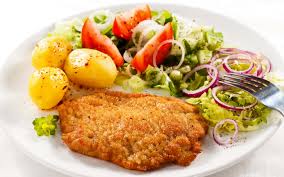
将“meal”与“may all”相结合,记忆成“May all meals be tasty”。这样,每当你想起“meal”,就会联想到“所有的餐点都是美味的”,帮助记住这个单词的意思。
机器生成的内容难免有错,看到不靠谱的拆解请告诉我们
中文词源
meal 餐,一顿饭
来自古英语mael,固定时间,吃饭点,来自Proto-Germanic*maela,来自PIE*me,测量,词源同meter,measure.词义由测量引申为固定时间,最后引申词义用餐时间,一顿饭。词义演变比较同源词time,tide,deal.
meal 谷物粗粉来自古英语melu,面粉,谷粉,来自PIE*mel,软的,磨,词源同mill,mallet.
英语词源
- meal
-
meal: [OE] Meal ‘repast’ and meal ‘flour’ are two distinct words. The former originally meant ‘measure’: it goes back via prehistoric Germanic *mǣlaz (source of German mal ‘time, occasion’ and mahl ‘meal’, Dutch maal ‘time, meal’, and Swedish mål ‘meal’) to the Indo-European base *me- ‘measure’, which is also the ancestor of English measure.
The semantic progression from ‘measure’ (which died out for meal in the Middle English period, but survives in the compound piecemeal [13], etymologically ‘measured piece by piece’) to ‘repast’ was via ‘measured or fixed time’ (hence the meaning ‘time, occasion’ in many of the related Germanic forms) and ‘time fixed for eating’. Meal ‘flour’ (as in oatmeal) goes back ultimately to Indo-European *mel-, *mol-, *ml- ‘grind’, source of a wide range of other English words from mild and mill to molar and mould.
From it was descended West and North Germanic *melwam, which has differentiated to German mehl, Dutch meel, Swedish mjōl, Danish mel, and English meal. It has been speculated that mellow [15] may have originated in the use of Old English melu ‘meal’ as an adjective, in the sense ‘soft and rich like flour’.
=> measure, piecemeal; mellow, mild, mill, molar, mould - meal (n.1)
- "food; time for eating," c. 1200 (perhaps late Old English), mel "appointed time for eating," also "a meal, feast," from Old English mæl "fixed time, occasion, a meal," from Proto-Germanic *mæla- (cognates: Old Frisian mel "time;" Middle Dutch mael, Dutch maal "time, meal;" Old Norse mal "measure, time, meal;" German Mal "time," Mahl "meal;" Gothic mel "time, hour"), from PIE *me-lo-, from root *me- "to measure" (see meter (n.2)). Original sense of "time" is preserved in piecemeal. Meals-on-wheels attested from 1961. Meal ticket first attested 1870 in literal sense of "ticket of admission to a dining hall;" figurative sense of "source of income or livelihood" is from 1899.
- meal (n.2)
- "edible ground grain," Old English melu "meal, flour," from Proto-Germanic *melwan "grind" (cognates: Old Frisian mele "meal," Old Saxon melo, Middle Dutch mele, Dutch meel, Old High German melo, German Mehl, Old Norse mjöl "meal;" Old Saxon, Old High German, Gothic malan "to grind," German mahlen), from PIE root *mel- (1) "soft" (see mallet).
权威例句
- 1. We had a nice meal with a bottle of champagne.
- 我们美餐了一顿,还喝了一瓶香槟。
- 2. The waiter offered him red wine or white wine with his meal.
- 侍者为他端上佐餐的红葡萄酒或者白葡萄酒。
- 3. You get an interesting meal for a reasonable price.
- 你花不多的钱就可以吃一顿很特别的饭。
- 4. On arrival, a six-course meal was top of the agenda.
- 他们到达之后要做的第一件事是吃一顿六道菜的大餐。
- 5. Ray and I ate our meal and reminisced about the trip.
- 雷和我吃着饭,回忆起那次旅行。
词语辨析
【dinner, meal】
这组词都有“餐”的意思,其区别是:
dinner: 正餐。指一日中的主餐,可中午吃,也可晚间吃。
meal: 泛指一日三餐的任一餐,也可指一餐所吃的东西。
这组词都有“餐”的意思,其区别是:
dinner: 正餐。指一日中的主餐,可中午吃,也可晚间吃。
meal: 泛指一日三餐的任一餐,也可指一餐所吃的东西。