记忆方法
1. overlap => lap.
2. 谐音“来拍”。
2. 谐音“来拍”。
看到不对的地方请告诉我们
词族 · lap
派生词
中文词源
lap 大腿,一圈,舔食
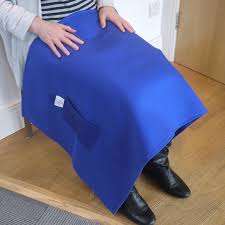
1.来自古英语laeppa,挂布,衣摆,裙摆,词源同label,lapel,后用来指遮膝盖的裙摆,膝盖,大腿。
2.来自古英语*wlappan,围,裹,来自PIE*wel,转,弯,词源同envelop,involve.引申词义一圈。
3.来自PIE*lab,舔,拟声词,词源同labial,lip.
英语词源
- lap
-
lap: English now has three distinct words lap, but probably two of them are ultimately related. Lap ‘upper legs of a seated person’ [OE] originally meant ‘flap of a garment’, and it goes back to a prehistoric Germanic source which also produced German lappen ‘rag, cloth, flap, lobe’, and which may lie behind label [14]. It seems likely that lap in the sense ‘folds of a garment’ was the basis of the Middle English verb lap, which meant ‘wrap’, and hence ‘extend beyond’.
From this come both the verb overlap [18] and the noun lap [18], whose modern meaning ‘one circuit of a course’ emerged in the 19th century. Lap ‘lick up’ [OE] comes from a prehistoric Germanic base *lap-, which was related to Latin lambēre ‘lick’ (source of English lambent [17], and possibly responsible also for lamprey and limpet).
=> label; lambent - lap (n.)
- Old English læppa (plural læppan) "skirt or flap of a garment," from Proto-Germanic *lapp- (cognates: Old Frisian lappa, Old Saxon lappo, Middle Dutch lappe, Dutch lap, Old High German lappa, German Lappen "rag, shred," Old Norse leppr "patch, rag"), from PIE root *leb- "be loose, hang down."
Sense of "lower part of a shirt" led to that of "upper legs of seated person" (c. 1300). Used figuratively ("bosom, breast") from late 14c., as in lap of luxury, first recorded 1802. From 15c.-In 17c. the word (often in plural) was a euphemism for "female pudendum," but this is not the source of lap dance, which is first recorded 1993.To lap dance, you undress, sit your client down, order him to stay still and fully clothed, then hover over him, making a motion that you have perfected by watching Mister Softee ice cream dispensers. [Anthony Lane, review of "Showgirls," "New Yorker," Oct. 16, 1995]
That this is pleasure and not torment for the client is something survivors of the late 20c. will have to explain to their youngers. - lap (v.1)
- "take up liquid with the tongue," from Old English lapian "to lap up, drink," from Proto-Germanic *lapojan (cognates: Old High German laffen "to lick," Old Saxon lepil, Dutch lepel, German Löffel "spoon"), from PIE imitative base *lab- (cognates: Greek laptein "to sip, lick," Latin lambere "to lick"), indicative of licking, lapping, smacking lips. Meaning "splash gently" first recorded 1823, based on similarity of sound. Related: Lapped; lapping.
- lap (v.2)
- "to lay one part over another," early 14c., "to surround (something with something else)," from lap (n.). Figurative use, "to envelop (in love, sin, desire, etc.)" is from mid-14c. The sense of "to get a lap ahead (of someone) on a track" is from 1847, on notion of "overlapping." The noun in this sense is 1670s, originally "something coiled or wrapped up;" meaning "a turn around a track" (1861) also is from this sense. Related: Lapped; lapping; laps.
权威例句
- 1. We don't live in the lap of luxury, but we're comfortable.
- 我们的生活虽然并非锦衣玉食,也算是衣食无忧。
- 2. Politicians want a lap-dog press which will uncritically report their propaganda.
- 政客们想要的是不问是非、甘为他们搞宣传的哈巴狗一样的新闻媒体。
- 3. By half distance we held a comfortable two-lap lead.
- 到半程时,我们轻松领先两圈。
- 4. Hugh glanced at the child on her mother's lap.
- 休瞥了一眼坐在她妈妈膝上的小女孩。
- 5. By the third lap Kinkead had touched 289 m.p.h.
- 到第三圈时,金基德的车速达到了每小时289英里。