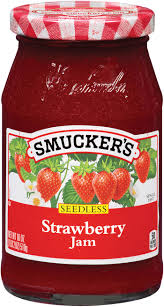
记忆方法
1. MM 的家塞满果酱.
2. jam谐音“酱”
2. jam谐音“酱”
看到不对的地方请告诉我们
词族 · jam
中文词源
jam 果酱,堵塞,塞车
词源不详,可能来自cram变体,塞进,强塞,引申词义堵塞,塞车。果酱义可能来自同一词源,即把水果压碎制成果酱。
英语词源
- jam
-
jam: [18] The verb jam, meaning ‘press tightly together’, first appears in the early 18th century (the earliest-known unequivocal example of its transitive use is in Daniel Defoe’s Robinson Crusoe 1719: ‘The ship stuck fast, jaum’d in between two rocks’). It is not known where it came from, but it is generally assumed to be imitative or symbolic in some way of the effort of pushing.
Equally mysterious are the origins of jam the sweet substance spread on bread, which appeared around the same time. Contemporary etymologists were nonplussed (Nathan Bailey had a stab in the 1730s: ‘prob. of J’aime, i.e. I love it; as Children used to say in French formerly, when they liked any Thing’; but Dr Johnson in 1755 confessed ‘I know not whence derived’); and even today the best guess that can be made is that the word refers to the ‘jamming’ or crushing of fruit into jars.
- jam (v.)
- "to press tightly," also "to become wedged," 1706, of unknown origin, perhaps a variant of champ (v.). Of a malfunction in the moving parts of machinery, by 1851. Sense of "cause interference in radio signals" is from 1914. Related: Jammed; jamming. The adverb is recorded from 1825, from the verb.
- jam (n.1)
- "fruit preserve," 1730s, probably a special use of jam (v.) with a sense of "crush fruit into a preserve."
- jam (n.2)
- "a tight pressing between two surfaces," 1806, from jam (v.). Jazz meaning "short, free improvised passage performed by the whole band" dates from 1929, and yielded jam session (1933); but this is perhaps from jam (n.1) in sense of "something sweet, something excellent." Sense of "machine blockage" is from 1890, which probably led to the colloquial meaning "predicament, tight spot," first recorded 1914.
权威例句
- 1. They were in a real jam, Bob thought glumly.
- 他们确实遇上麻烦了,鲍勃闷闷不乐地想。
- 2. His room was jam-packed with fruit, flowers, gifts etc.
- 他的房间里堆满了水果、鲜花及礼品等。
- 3. Did she do things like bottling fruit or making jam?
- 她干过将水果装瓶或做果酱之类的活计吗?
- 4. Place them in a jam jar, porcelain bowl, or other similar container.
- 将它们装入果酱罐、瓷碗或其他类似容器中。
- 5. Pickled cucumbers, jam, pickled berries, tomatoes; you name it, they've got it.
- 酸黄瓜、果酱、腌浆果、西红柿,凡是你说得出的,他们都有。
词语辨析
【compress, press, squeeze, squash, jam】
这组词都有“压、挤”的意思,其区别是:
compress: 指把某些东西压在一起或使占有较小空间。
press: 普通用词,指一个物体在另一个物体上加压力。
squeeze: 多指从两面或多面施加压力来压紧、压碎或压出水来。
squash: 指某物受力被压偏或压碎。也指塞挤。
jam: 专指四面八方都压紧或塞满。
这组词都有“压、挤”的意思,其区别是:
compress: 指把某些东西压在一起或使占有较小空间。
press: 普通用词,指一个物体在另一个物体上加压力。
squeeze: 多指从两面或多面施加压力来压紧、压碎或压出水来。
squash: 指某物受力被压偏或压碎。也指塞挤。
jam: 专指四面八方都压紧或塞满。