记忆方法
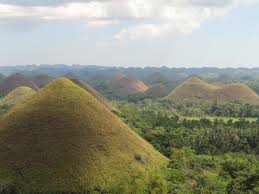
将“hill”与“hillbilly”联想,想象一个“hillbilly”即乡村小人物,站在一个“hill”(小山丘)上,这可以帮助你记住这个单词的意思是“小山丘”。
机器生成的内容难免有错,看到不靠谱的拆解请告诉我们
词族 · hill
派生词
中文词源
hill 山丘,小山
来自古英语hyll,小山,来自PIE*kel,上升,升起,突出,词源同column,culminate,excel.其高度并没有准确的定义和规定。
英语词源
- hill
-
hill: [OE] The ultimate source of hill was Indo- European *kel-, *kol-, which denoted ‘height’ and also produced English column, culminate, and excellent. A derivative *kulnís produced Germanic *khulniz, which now has no surviving descendants apart from English hill, but related words for ‘hill’ or ‘mountain’ in other Indo- European language groups include French colline, Italian colle, and Spanish and Romanian colina (all from Latin collis ‘hill’), Lithuanian kálnas, and Latvian kalns.
=> column, culminate, excellent - hill (n.)
- Old English hyll "hill," from Proto-Germanic *hulni- (cognates: Middle Dutch hille, Low German hull "hill," Old Norse hallr "stone," Gothic hallus "rock," Old Norse holmr "islet in a bay," Old English holm "rising land, island"), from PIE root *kel- (4) "to rise, be elevated, be prominent; hill" (cognates: Sanskrit kutam "top, skull;" Latin collis "hill," columna "projecting object," culmen "top, summit," cellere "raise," celsus "high;" Greek kolonos "hill," kolophon "summit;" Lithuanian kalnas "mountain," kalnelis "hill," kelti "raise"). Formerly including mountains, now usually confined to heights under 2,000 feet.
In Great Britain heights under 2,000 feet are generally called hills; 'mountain' being confined to the greater elevations of the Lake District, of North Wales, and of the Scottish Highlands; but, in India, ranges of 5,000 and even 10,000 feet are commonly called 'hills,' in contrast with the Himalaya Mountains, many peaks of which rise beyond 20,000 feet. [OED]
Phrase over the hill "past one's prime" is first recorded 1950.
The term mountain is very loosely used. It commonly means any unusual elevation. In New England and central New York, elevations of from one to two thousand feet are called hills, but on the plains of Texas, a hill of a few hundred feet is called a mountain. [Ralph S. Tarr, "Elementary Geology," Macmillan, 1903]
Despite the differences in defining mountain systems, Penck (1896), Supan (1911) and Obst (1914) agreed that the distinction between hills, mountains, and mountain systems according to areal extent or height is not a suitable classification. ["Geographic Information Science and Mountain Geomorphology," 2004]
权威例句
- 1. A girl in a red smock tripped down the hill.
- 一个身穿红色罩衫的女孩迈着轻快的步子下山。
- 2. He closed his door and started the quarter-mile walk down the hill.
- 他关上门,踏上了1/4英里长的下山路.
- 3. He turned his back on them and stomped off up the hill.
- 他转身不理他们,噔噔噔地爬上了山。
- 4. This policy had repeatedly come under strong criticism on Capitol Hill.
- 该政策在美国国会屡遭强烈批评。
- 5. The Newton Hotel is halfway up a steep hill.
- 丽东酒店位于陡峭的半山腰上。
词语辨析
【hill, volcano, mountain, range, mount, peak】
这组词都有“山”的意思,其区别是:
hill: 通常指小的土山、石山或浅丘。有时也指高山,复数表群山。
volcano: 特指主要由喷出的熔岩和火山灰堆积而成的圆锥形火山。
mountain: 通常指比hill高而陡的高山、山岳。但这种区别不是绝对的,“大”与“小”常常是相对而言。
range: 形成的山脉或岭。
mount: 常用于地名之前, 即一般放在专用名词前,书面用词。
peak: 指山峰,也可指山顶。
这组词都有“山”的意思,其区别是:
hill: 通常指小的土山、石山或浅丘。有时也指高山,复数表群山。
volcano: 特指主要由喷出的熔岩和火山灰堆积而成的圆锥形火山。
mountain: 通常指比hill高而陡的高山、山岳。但这种区别不是绝对的,“大”与“小”常常是相对而言。
range: 形成的山脉或岭。
mount: 常用于地名之前, 即一般放在专用名词前,书面用词。
peak: 指山峰,也可指山顶。