记忆方法
1. go, gone => gang.
看到不对的地方请告诉我们
词族 · gang
中文词源
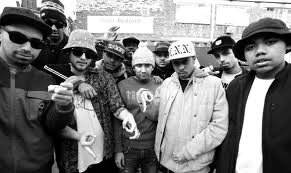
gang 一群,一伙
来自PIE*ghengh, 走,词源同go(有争议)。即走的一群人。
英语词源
- gang
-
gang: [12] Gang originally meant ‘going, journey’. It was borrowed from Old Norse gangr, which goes back ultimately to the same Germanic source (the verb *ganggan ‘go’) as produced the German past participle gegangen ‘gone’ and Old English gangan ‘go’ – still preserved in Scottish gang ‘go’ and in gangway [17]. Originally literally a ‘way for going’.
The word’s modern meaning seems to have developed via ‘quantity carried on a journey’ (a common usage in Scottish English well into the 19th century) and ‘set of articles carried together’ to (in the 17th century) ‘group of workmen’ and ‘group of people acting together for a (bad) purpose’.
- gang (v.)
- 1856, from gang (n.). Related: Ganged; ganging. To gang up (on) is first attested 1919.
- gang (n.)
- from Old English gang "a going, journey, way, passage," and Old Norse gangr "a group of men, a set," both from Proto-Germanic *gangaz (cognates: Old Saxon, Old Frisian, Danish, Dutch, Old High German, German gang, Old Norse gangr, Gothic gagg "act of going"), from PIE root *ghengh- "to step" (cognates: Sanskrit jangha "shank," Avestan zanga- "ankle," Lithuanian zengiu "I stride"). Thus not considered to be related to go.
The sense evolution is probably via meaning "a set of articles that usually are taken together in going" (mid-14c.), especially a set of tools used on the same job. By 1620s this had been extended in nautical speech to mean "a company of workmen," and by 1630s the word was being used, with disapproving overtones, for "any band of persons traveling together," then "a criminal gang or company" (gang of thieves, gang of roughs, etc.). By 1855 gang was being used in the sense "group of criminal or mischievous boys in a city." In American English, especially of slaves working on plantations (1724). Also formerly used of animal herds or flocks (17c.-19c.). Gangway preserves the original sense of the word, as does gangplank.
权威例句
- 1. Come on over, we've got lots of the old gang here.
- 过来吧,好多老朋友都在这儿。
- 2. His family was subjected to a hideous attack by the gang.
- 他的家人遭到了匪帮的恐怖袭击。
- 3. There are problems of urban decay and gang violence.
- 存在城市衰败和帮派暴力的问题。
- 4. The gang thought of hitting him too, but decided just to spit.
- 那伙人也想过要揍他,但最后只是啐了他一口。
- 5. The gang finally fled with a large amount of cash and jewellery.
- 该团伙最后携大量现金和珠宝逃之夭夭。
词语辨析
【band, mob, masses, gang, swarm, group, throug, crowd】
这组词都有“群,帮,伙”的意思,其区别是:
band: 多指一群有明确宗旨,为共同目的而结合在一起的人,常含贬义。
mob: 指无组织、乱七八糟凑合在一起的乌合之众,或指聚集在一起寻衅滋事的人群,多为暴徒。
masses: 指群众或人民大众。
gang: 常指从事非法、暴力或敌对活动的帮派或团伙。有时呈中性,词义同group。
swarm: 指人数众多,杂乱无章,不停移动的一群人。
group: 普通用词,通常指有组织、有秩序的一群人,也可指无意汇集在一起的一群人。
throug: 书面用词,意义接近crowd,侧重密集地挤在一起的一群,含挤在一起向前推进之意。
crowd: 常指无组织地乱哄哄地挤在一起的人群。