记忆方法
将“form”联想到“from”,想象它像是从某个物体“形成”出来的,或者是“来自”某个源头。这种方法可以帮助你记住“form”作为“形成”或“形式”的意思。
机器生成的内容难免有错,看到不靠谱的拆解请告诉我们
词族 · form
中文词源
form 类型,模式
来自拉丁语forma, 形式,模式,可能来自希腊语morphe, 形式,外表,词源同Morpheus, metamorphosis.
英语词源
- form
-
form: [13] Form comes via Old French forme from Latin forma ‘shape, contour’, a word whose origins have never been satisfactorily explained. Its semantic similarity to Greek morphé ‘form, shape’ (source of English morphology [19]) is striking, and has led some etymologists to suggest that the Latin word may be an alteration of the Greek one, presumably by metathesis (the reversal of sounds, in this case /m/ and /f/).
Another possibility, however, is that it comes from ferīre ‘strike’, from the notion of an impression, image, or shape being created by beating. Of the word’s wide diversity of modern senses, ‘school class’, a 16th-century introduction, was inspired by the late Latin usage forma prima, forma secunda, etc for different orders of clergy, while ‘bench’ may go back to the Old French expression s’asseoir en forme ‘sit in a row’.
Amongst forma’s derivatives that have found their way into English are formal [14], format [19], formula [17] (from a Latin diminutive form), and uniform.
=> formal, format, formula, inform, uniform - form (n.)
- c. 1200, forme, fourme, "semblance, image, likeness," from Old French forme, fourme, "physical form, appearance; pleasing looks; shape, image; way, manner" (12c.), from Latin forma "form, contour, figure, shape; appearance, looks; a fine form, beauty; an outline, a model, pattern, design; sort, kind condition," a word of unknown origin. One theory holds that it is from or cognate with Greek morphe "form, beauty, outward appearance" (see Morpheus) via Etruscan [Klein].
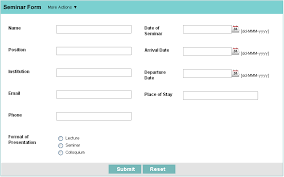
From c. 1300 as "physical shape (of something), contour, outline," of a person, "shape of the body;" also "appearance, likeness;" also "the imprint of an object." From c. 1300 as "correct or appropriate way of doing something; established procedure; traditional usage; formal etiquette." Mid-14c. as "instrument for shaping; a mould;" late 14c. as "way in which something is done," also "pattern of a manufactured object." Used widely from late 14c. in theology and Platonic philosophy with senses "archetype of a thing or class; Platonic essence of a thing; the formative principle." From c. 1300 in law, "a legal agreement; terms of agreement," later "a legal document" (mid-14c.). Meaning "a document with blanks to be filled in" is from 1855. From 1590s as "systematic or orderly arrangement;" from 1610s as "mere ceremony." From 1550s as "a class or rank at school" (from sense "a fixed course of study," late 14c.). Form-fitting (adj.) in reference to clothing is from 1893. - form (v.)
- c. 1300, formen, fourmen, "create, give life to, give shape or structure to; make, build, construct, devise," from Old French fourmer "formulate, express; draft, create, shape, mold" (12c.) and directly from Latin formare "to shape, fashion, build," also figurative, from forma "form, contour, figure, shape" (see form (n.)). From late 14c. as "go to make up, be a constituent part of;" intransitive sense "take form, come into form" is from 1722. Related: Formed; forming.
权威例句
- 1. Generosity is its own form of power.
- 别低估了慷慨的力量。
- 2. Return the enclosed Donation Form today in the prepaid envelope provided.
- 请于今日将随函附上的捐款表格用所提供的邮资预付的信封寄回。
- 3. Swimming is probably the best form of exercise you can get.
- 游泳或许是现有的最佳锻炼方式。
- 4. Our bone marrow contains fat in the form of small globules.
- 我们的骨髓中含有小球状的脂肪。
- 5. Character is not separable from physical form but is governed by it.
- 性格和外表是分不开的,而且观其形知其性。
词语辨析
【rgeister, schedule, roll, form, catalog(ue), chart, list, table】
这组词都有“名单、目录、表格”的意思,其区别是:
rgeister: 多指官方对人或事作出的正式书面记录或详细清单。
schedule: 既可指时间或计划的安排表,又可指详细列出的所有分类项的清单或细表。
roll: 多指人员的姓名名单,尤指属于团体或军事单位的全体人员名单。
form: 指上面印有横线或格让人填写规定内容的表格。
catalog(ue): 指列出有全部队名、物名或项目等的目录,有时附有简要说明的分类名单或一览表。
chart: 指把资料制成表格等形式供人看的图表。
list: 最普通用词,含义广。指按字母顺序、时间先后或类别等排列的姓名或项目等的单子。
table: 普通用词,一般指易于迅速查阅使用,具有特定编排方法的目录或表格。
【figure, form, shape, outline】
这组词都有“形式”的意思,其区别是:
figure: 指轮廓、外形,尤指体态,相貌或身体。
form: 最普通用词,含义广,既可指客观物体的外形,又可用于抽象概念的“形”。
shape: 通常指由线和面所围成的外观上的形,侧重立体形状。
outline: 指任何形状的轮廓线。