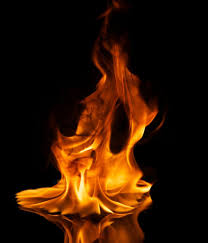
记忆方法
1. old flame 老情人(旧火焰)。
看到不对的地方请告诉我们
词族 · flame
派生词
中文词源
flame 火焰
来自PIE*bhel, 燃烧,闪光,词源同blank, blaze.
英语词源
- flame
-
flame: [14] Flame traces its history back to an Indo-European *bhleg-, *phleg-, which also produced Greek phlóx ‘flame’ (source of English phlox, and related to phlegm and phlegmatic), Latin flāgrāre ‘burn, blaze’ (source of English flagrant), Latin fulmen (source of English fulminate), and Latin fulgēre ‘shine’ (source of English refulgent [16]).
The relevant descendant in this case was Latin flamma ‘flame’, acquired by English via Old French flame. It had a diminutive form flammula, which produced Old French flambe ‘small flame’, ultimate source of English flambé [19] and flamboyant [19] (originally an architectural term applied to a 15th- and 16th-century French Gothic style characterized by wavy flamelike forms).
=> flagrant, flamboyant, flamingo, phlegm, refulgent - flame (n.)
- Middle English flaume, also flaumbe, flambe, flame, flamme, mid-14c., "a flame;" late 14c., "a flaming mass, a fire; fire in general, fire as an element;" also figurative, in reference to the "heat" or "fire" of emotions, from Anglo-French flaume, flaumbe "a flame" (Old French flambe, 10c.), from Latin flammula "small flame," diminutive of flamma "flame, blazing fire," from PIE *bhleg- "to shine, flash," from root *bhel- (1) "to shine, flash, burn" (see bleach (v.)).
The meaning "a sweetheart, object of one's passion" is attested from 1640s; the figurative sense of "burning passion" was in Middle English, and the nouns in Old French and Latin also meant "fire of love, flame of passion." The Australian flame-tree is from 1857. - flame (v.)
- Middle English flaumen, also flaumben, flomben, flamben, flamen, flammen, c. 1300 (implied in flaming "to shine (like fire), gleam, sparkle like flames;" mid-14c. as "emit flames, be afire, to blaze," from Anglo-French flaumer, flaumber (Old French flamber) "burn, be on fire, be alight" (intransitive), from flamme "a flame" (see flame (n.)).
Transitive meaning "to burn, set on fire" is from 1580s. Meaning "break out in violence of passion" is from 1540s; the sense of "unleash invective on a computer network" is from 1980s. Related: Flamed; flaming. To flame out, in reference to jet engines, is from 1950.
权威例句
- 1. Intense balls of flame rose up into the sky.
- 炽热的火球冲上天空。
- 2. The water was heated by a naked gas flame.
- 水是用燃气明火加热的。
- 3. The two sheets of flame clashed, soaring hundreds of feet high.
- 两片火焰化作一处,腾起了几百英尺高的烈焰。
- 4. The best way to respond to a flame is to ignore it.
- 回应谩骂性电子邮件的最好办法就是置之不理。
- 5. The streets were now in one fierce sheet of flame.
- 街道上现在是一片火海。
词语辨析
【flash, glare, blaze, glow, flare, light, twinkle, glitter, flame】
这组词都有“火焰、烈火、光”的意思,其区别是:
flash: 指突然发出而随即消失的闪光。
glare: 指眩目的光。
blaze: 指猛烈燃烧所发生强烈的光。
glow: 指像冶炼铁和钢时发出的红光。
flare: 指摇曳的火焰。
light: 普通用词,指日、月、星或灯等的光。
twinkle: 指如星光等的闪烁。
glitter: 指连续发出闪烁不定的光。
flame: 指一条或多条火舌,多用复数形式,指由许多火舌构成的大火。
这组词都有“火焰、烈火、光”的意思,其区别是:
flash: 指突然发出而随即消失的闪光。
glare: 指眩目的光。
blaze: 指猛烈燃烧所发生强烈的光。
glow: 指像冶炼铁和钢时发出的红光。
flare: 指摇曳的火焰。
light: 普通用词,指日、月、星或灯等的光。
twinkle: 指如星光等的闪烁。
glitter: 指连续发出闪烁不定的光。
flame: 指一条或多条火舌,多用复数形式,指由许多火舌构成的大火。