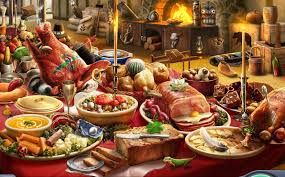
记忆方法
feast“肥死他”-----盛宴
看到不对的地方请告诉我们
词族 · feast
中文词源
feast 盛宴
来自festival, 宗教节日,节日。引申词义盛宴。
英语词源
- feast
-
feast: [13] The notion of ‘eating’ is a secondary semantic development for feast, whose underlying meaning (as may be guessed from the related festival [14] and festivity [14]) has more to do with joyousness than with the appeasement of hunger. Its ultimate source is the Latin adjective festus, which meant ‘joyful, merry’. This was used as a plural noun, festa, meaning ‘celebratory ceremonies, particularly of a religious nature’, which came down to Old French as feste.
This was the source of English feast, and its modern French descendant gave English fête [18]. Incidentally, the sense ‘sumptuous meal’, present in feast but not in fête, goes back to the Latin singular noun festum. Also related is festoon [17], acquired via French from Italian festone, which originally meant ‘ornament for a festive occasion’; and fair (as in fairground) comes ultimately from Latin fēria, first cousin to festus.
=> fair, festival, festoon, fête - feast (v.)
- c. 1300, "partake of a feast," from Old French fester "to feast, make merry; observe (a holiday)" (Modern French fêter), from feste "religious festival" (see feast (n.)). Related: Feasted; feasting.
- feast (n.)
- c. 1200, "secular celebration with feasting and entertainment" (often held on a church holiday); c. 1300, "religious anniversary characterized by rejoicing" (rather than fasting), from Old French feste "religious festival, holy day; holiday; market, fair; noise, racket; jest, fun" (12c., Modern French fête), from Vulgar Latin *festa (fem. singular; also source of Italian festa, Spanish fiesta), from Latin festa "holidays, feasts, festal banquets," noun use of neuter plural of festus "festive, joyful, merry," related to feriae "holiday" and fanum "temple," from Proto-Italic *fasno- "temple," from PIE *dhis-no- "divine, holy; consecrated place," from *dhes- "root of words in religious concepts" [Watkins].
The spelling -ea- was used in Middle English to represent the sound we mis-call "long e." Meaning "abundant meal" (whether public or private) is by late 14c. Meaning "any enjoyable occasion or event" is from late 14c.
权威例句
- 1. The feast was served by his mother and sisters.
- 这顿美餐是他母亲和他的姐妹们准备的。
- 2. Well we did have a midnight feast, me and my sister.
- 我和姐姐的确在半夜大吃了一顿。
- 3. On the following day a feast was given in King John's honour.
- 第二天设宴款待约翰王。
- 4. Chicago provides a feast for the ears of any music lover.
- 《芝加哥》将给所有音乐爱好者献上一场听觉的盛宴。
- 5. Banners were paraded from church to church on feast days.
- 宗教节日期间,人们打着横幅在教堂间游行。
词语辨析
【dinner, feast, banquet, party】
这组词都有“宴会”的意思,其区别是:
dinner: 普通用词,含义广。本义指一日的主餐,但多用于指宴请客人的正式的一餐。
feast: 指筵席酒席,有时可与banquet换用,但前者强调共享欢乐的气氛。
banquet: 指正式而盛大的宴会或国宴。
party: 指一般的社交聚会,也引申指宴请或宴会。
这组词都有“宴会”的意思,其区别是:
dinner: 普通用词,含义广。本义指一日的主餐,但多用于指宴请客人的正式的一餐。
feast: 指筵席酒席,有时可与banquet换用,但前者强调共享欢乐的气氛。
banquet: 指正式而盛大的宴会或国宴。
party: 指一般的社交聚会,也引申指宴请或宴会。