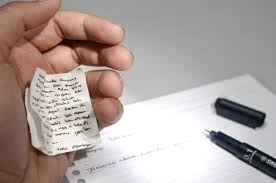
记忆方法
cheat..........欺 他............欺 骗
看到不对的地方请告诉我们
词族 · cheat
中文词源
cheat 欺骗
来自古法语escheat, 来自拉丁词*excadere,前缀ex-,向外,词根cad, 掉落,词源同case, accident. 原为一特殊官职,其主要职责为清收无主领地或财产,或没有继承人的财物,因担任这一职务的官员经常做一些中饱私囊,侵吞国有财产的事情,最终固定为现在的词义。
字母es被当做前缀ex- 脱落。
英语词源
- cheat
-
cheat: [14] Cheat is a reduced form of escheat, a legal term for the reversion of property to the state on the death of the owner without heirs. This came from Old French escheoite, a derivative of the past participle of the verb escheoir ‘befall by chance, happen, devolve’, from Vulgar Latin *excadēre ‘fall away’, a compound verb formed from the prefix ex- ‘out’ and Latin cadere ‘fall’ (source of a wide range of English words from case ‘circumstance’ to occasion).
The semantic steps leading to the modern English sense of cheat seem to be ‘confiscate’; ‘deprive of something dishonestly’; ‘deceive’.
=> cadence, case, escheat, occasion, occident - cheat (v.)
- mid-15c., "to escheat," a shortening of Old French escheat, legal term for revision of property to the state when the owner dies without heirs, literally "that which falls to one," past participle of escheoir "happen, befall, occur, take place; fall due; lapse (legally)," from Late Latin *excadere "fall away, fall out," from Latin ex- "out" (see ex-) + cadere "to fall" (see case (n.1)). Also compare escheat. The royal officers evidently had a low reputation. Meaning evolved through "confiscate" (mid-15c.) to "deprive unfairly" (1580s). To cheat on (someone) "be sexually unfaithful" first recorded 1934. Related: Cheated; cheating.
- cheat (n.)
- late 14c., "forfeited property," from cheat (v.). Meaning "a deceptive act" is from 1640s; earlier, in thieves' jargon, it meant "a stolen thing" (late 16c.), and earlier still "dice" (1530s). Meaning "a swindler" is from 1660s.
权威例句
- 1. I know it sounds unbelievable but I never wanted to cheat.
- 我知道听上去难以置信,但我从不想撒谎。
- 2. He raised his right fist and declaimed: "Liar and cheat!"
- 他举起右拳高喊:“骗子,骗子!”
- 3. She is accused of attempting to cheat the taxman.
- 她被指控企图蒙骗税务员。
- 4. Space the desk a meter apart so that the pupils can't cheat.
- 把桌子按一米的间隔摆开以防学生作弊.
- 5. I hope you wouldn't lower yourself to cheat in the examination.
- 希望你考试不要作弊,别做有失身份的事.
词语辨析
【deceive, cheat, hide, conceal】
deceive: 不告诉实情
cheat: 不诚实手段获取个人利益;
hide: 不含故意的意思;
conceal: 故意隐藏;
【deceive, cheat, trick, fool】
这组词都有“欺骗”的意思,其区别是:
deceive: 最普通用词,指用虚假外表使人信以为真,或蓄意歪曲事实,或造成错误印象使人上当受骗。
cheat: 普通用词,指用蒙蔽他人的手段取得所需之物,尤多指在赢利的买卖中欺骗人。
trick: 指用阴谋诡计等骗得信任或得到所需之物。
fool: 指把别人当傻瓜,愚弄欺骗别人。
deceive: 不告诉实情
cheat: 不诚实手段获取个人利益;
hide: 不含故意的意思;
conceal: 故意隐藏;
【deceive, cheat, trick, fool】
这组词都有“欺骗”的意思,其区别是:
deceive: 最普通用词,指用虚假外表使人信以为真,或蓄意歪曲事实,或造成错误印象使人上当受骗。
cheat: 普通用词,指用蒙蔽他人的手段取得所需之物,尤多指在赢利的买卖中欺骗人。
trick: 指用阴谋诡计等骗得信任或得到所需之物。
fool: 指把别人当傻瓜,愚弄欺骗别人。