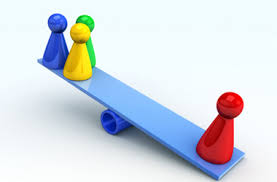
记忆方法
将“bias”与“bi”结合记忆,想象这是一个具有双重面向的物品,如一面倾斜的天平,其倾斜的一边代表“偏见”。这样,通过天平的倾斜形象,可以帮助记住“bias”表示偏见的含义。
机器生成的内容难免有错,看到不靠谱的拆解请告诉我们
词族 · bias
中文词源
bias 偏见
词源不详。
英语词源
- bias
-
bias: [16] English acquired bias from Old French biais, but its previous history is uncertain. It probably came via Old Provençal, but where from? Speculations include Latin bifacem ‘looking two ways’, from bi- ‘two’ and faciēs ‘face’, and Greek epikársios ‘oblique’. When the word first entered English it meant simply ‘oblique line’, but by the end of the 16th century it was being applied more specifically to the game of bowls, in the sense of the ‘bowl’s curved path’, and also the ‘unequal weighting given to the bowl in order to achieve such a path’.
The modern figurative senses ‘inclination’ and ‘prejudice’ derive from this.
- bias (n.)
- 1520s, from French biais "slant, slope, oblique," also figuratively, "expedient, means" (13c., originally in Old French a past participle adjective, "sideways, askance, against the grain"), which is of unknown origin, probably from Old Provençal biais, with cognates in Old Catalan and Sardinian; possibly from Vulgar Latin *(e)bigassius, from Greek epikarsios "athwart, crosswise, at an angle," from epi- "upon" + karsios "oblique," from PIE *krs-yo-, from root *(s)ker- (1) "to cut" (see shear (v.)). It became a noun in Old French. "[A] technical term in the game of bowls, whence come all the later uses of the word" [OED]. Transferred sense of "predisposition, prejudice" is from 1570s in English.
For what a man had rather were true he more readily believes. Therefore he rejects difficult things from impatience of research; sober things, because they narrow hope; the deeper things of nature, from superstition; the light of experience, from arrogance and pride, lest his mind should seem to be occupied with things mean and transitory; things not commonly believed, out of deference to the opinion of the vulgar. Numberless in short are the ways, and sometimes imperceptible, in which the affections colour and infect the understanding. [Francis Bacon, "Novum Organum," 1620]
- bias (v.)
- 1620s, literal and figurative, from bias (n.). Related: Biased; biasing.
权威例句
- 1. Bias against women permeates every level of the judicial system.
- 各级司法机构普遍存在对女性的偏见。
- 2. The pro-gramme's researchers are guilty of bias and misrepresentation.
- 该项目的研究者们对心存偏见和误解感到非常内疚。
- 3. There were fierce attacks on the BBC for alleged political bias.
- 英国广播公司因被指具有政治偏见而遭到猛烈抨击。
- 4. The Department has a strong bias towards neuroscience.
- 这个系特别偏重神经科学。
- 5. Employers must consider all candidates impartially and without bias.
- 雇主必须公平而毫无成见地考虑所有求职者。
词语辨析
【prejudice, bias】
这组词都有“偏见,成见”的意思,其区别是:
prejudice: 侧重指在缺乏理由或证据之前就形成怀疑的、有恶感的偏见。
bias: 指因个人的好恶或偏见,对人或物作出的不正确、或好或坏的判断或意见。
这组词都有“偏见,成见”的意思,其区别是:
prejudice: 侧重指在缺乏理由或证据之前就形成怀疑的、有恶感的偏见。
bias: 指因个人的好恶或偏见,对人或物作出的不正确、或好或坏的判断或意见。