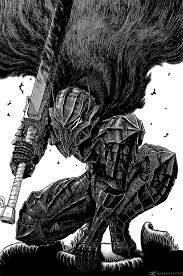
记忆方法
【记】源自bear + shirt 身披熊皮的发狂斗士
看到不对的地方请告诉我们
词族 · berserk
词形变化
中文词源
berserk 发怒
ber, 同bear, 熊。serk, 同sartorial, 缝制。原指熊皮制成的衣服。
英语词源
- berserk
-
berserk: [19] Sir Walter Scott appears to be responsible for introducing this word to the English language. He mentions it in a footnote to his novel The pirate 1822, adopting it (in the form berserkar) from the Icelandic berserkr ‘frenzied Norse warrior’. Its etymology is not altogether clear. Its second syllable represents serkr ‘coat, shirt’ (a word English used to have, as sark: cutty sark meant ‘short shirt’), but the first is disputed.
Scott took it to mean ‘bare’ (which would have been Icelandic berr), and in fact the anglicized form baresark was quite commonly used in the mid 19th century; the plausible-sounding notion underlying this is that the original berserkr was so called because in his battle-crazed frenzy he tore off his armour and fought in his shirt-sleeves – ‘bare-shirted’. However, 20th-century etymologists have tended to prefer the theory that ber- is ‘bear’, representing Icelandic bern-, a by-form of bjorn ‘bear’.
The concept of warriors dressing themselves in animals’ skins is an ancient one, found in many mythologies. The modern use of the word as an adjective, meaning ‘in a violent frenzy’, appears to date from the third quarter of the 19th century.
- berserk (adj.)
- 1844, from berserk (n.) "Norse warrior," by 1835, an alternative form of berserker (1822), a word which was introduced by Sir Walter Scott, from Old Norse berserkr (n.) "raging warrior of superhuman strength;" probably from *ber- "bear" + serkr "shirt," thus literally "a warrior clothed in bearskin." Thus not from Old Norse berr "bare, naked."
Thorkelin, in the essay on the Berserkir, appended to his edition of the Krisini Saga, tells that an old name of the Berserk frenzy was hamremmi, i.e., strength acquired from another strange body, because it was anciently believed that the persons who were liable to this frenzy were mysteriously endowed, during its accesses, with a strange body of unearthly strength. If, however, the Berserk was called on by his own name, he lost his mysterious form, and his ordinary strength alone remained. ["Notes and Queries," Dec. 28, 1850]
The adjectival use probably is from such phrases as berserk frenzy, or as a title (Arngrim the Berserk).
权威例句
- 1. He tossed back his head in a howl of berserk laughter.
- 他仰天狂笑。
- 2. When I saw him I went berserk.
- 我一看见他就冒火。
- 3. I completely lost it. I went mad, berserk.
- 我火冒三丈,发了疯似的。
- 4. He went berserk when he found out where I'd been.
- 他弄清楚我去过哪儿后勃然大怒。
- 5. The dog went berserk when a wasp stung him.
- 狗给黃蜂咬了,变得狂暴.