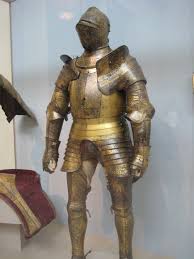
记忆方法
将“armour”分解为“arm”和“our”,想象一只手臂(arm)穿着厚重的衣物(our),就像古代士兵的盔甲,这样可以帮助记住这个单词表示“盔甲、装甲”的意思。
机器生成的内容难免有错,看到不靠谱的拆解请告诉我们
词族 · armour
英语词源
- armour
-
armour: [13] Armour comes ultimately from Latin armātūra ‘armour, equipment’, a derivative of the verb armāre ‘arm’ (the direct English borrowing armature [15] originally meant ‘armour’ or ‘weapons’, but the ‘protective’ notion of armour led to its application in the 18th century to ‘metal covering the poles of a magnet’). In Old French armātūra became armeure, and subsequently armure, the form in which it was borrowed into English (the -our ending was artificially grafted on in the 14th century on the model of other Latin-based words such as colour and odour). Armoury is French in origin: Old French armoier ‘coat of arms’ was a derivative of arme ‘weapon’; this became armoirie, which was borrowed into English in the 15th century as armory, meaning ‘heraldry’, but also, owing to their formal similarity, came to be used with the same sense as armour – ‘protective metal suit’ or ‘weapons’.
This was what armoury meant when it came into English in the 14th century (and the sense survived long enough to be used by Wordsworth in a sonnet to ‘Liberty’ 1802: ‘In our halls is hung armoury of invincible knights of old’). The meaning ‘place for keeping weapons’ developed in the 16th century.
=> armature - armour
- chiefly British English spelling of armor (q.v.); for suffix, see -or.
权威例句
- 1. He has taken to travelling in an armour-plated car.
- 他喜欢上了坐装甲车。
- 2. a suit of armour
- 一副盔甲
- 3. He wove a fascinating tale of knights in shining armour.
- 他编了一个穿着明亮盔甲的骑士的迷人故事.
- 4. Knights fought in armour.
- 骑士穿着盔甲打仗.
- 5. His body was encased in shining armour.
- 他全身披着明晃晃的甲胄.