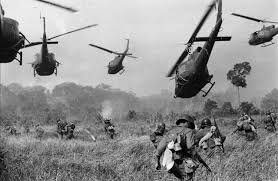
记忆方法
1. 战神Mars 创造了一个单词 war 和martial.
看到不对的地方请告诉我们
词族 · war
中文词源
war 战争
来自PIE*wers,搅拌,混乱,来自PIE*wer的扩大格,转,弯,词源同wrestle,versus。引申词义战争。
英语词源
- war
-
war: [12] The word war was acquired from werre, the northern dialect form of Old French guerre. This in turn came from prehistoric Germanic *werra ‘strife’, which was formed from the base *wers- (source also of English worse and German wirren ‘confuse’). Warrior [13] is from the Old Northern French derivative werreieor. The diminutive of guerra, the Spanish equivalent of French guerre, gave English guerilla.
=> guerilla - war (n.)
- late Old English wyrre, werre "large-scale military conflict," from Old North French werre "war" (Old French guerre "difficulty, dispute; hostility; fight, combat, war;" Modern French guerre), from Frankish *werra, from Proto-Germanic *werz-a- (cognates: Old Saxon werran, Old High German werran, German verwirren "to confuse, perplex"), from PIE *wers- (1) "to confuse, mix up". Cognates suggest the original sense was "to bring into confusion."
Spanish, Portuguese, and Italian guerra also are from Germanic; Romanic peoples turned to Germanic for a "war" word possibly to avoid Latin bellum because its form tended to merge with bello- "beautiful." There was no common Germanic word for "war" at the dawn of historical times. Old English had many poetic words for "war" (wig, guð, heaðo, hild, all common in personal names), but the usual one to translate Latin bellum was gewin "struggle, strife" (related to win (v.)).
First record of war time is late 14c. Warpath (1775) is originally in reference to North American Indians, as are war-whoop (1761), war-paint (1826), and war-dance (1757). War crime first attested 1906 (in Oppenheim's "International Law"). War chest is attested from 1901; now usually figurative. War games translates German Kriegspiel (see kriegspiel). - war (v.)
- "to make war on," mid-12c.; see war (n.). Related: Warred; warring.
权威例句
- 1. The minute that the war started, everybody was glued to the television.
- 战事一起,所有人都盯紧了电视报道。
- 2. I use the short-wave radio to get the latest war news.
- 我用短波收音机收听最新的战事新闻。
- 3. The agreement has raised hopes that the war may end soon.
- 那项协议使人们感到战争有望很快结束。
- 4. The intelligence service conceived a grand design to assassinate the War Minister.
- 情报机构策划了一项暗杀陆军部长的重大计划。
- 5. Share prices and trading have been dulled by worries over the war.
- 股票价格和交易因人们对战争的忧虑而走低。
词语辨析
【battle, fight, struggle, combat, campaign, warfare, war, engagement】
这组词都有“战斗,战争”的意思,其区别是:
battle: 侧重指战争中的一次较全面、时间较长的战斗,也指陆军或海军在某一特定地区进行的战斗,或个人之间的争斗。
fight: 最普通用词,含义广,指战斗、斗争或打斗。
struggle: 指激烈或时间持续长的战斗或奋力斗争。
combat: 泛指军事行动,尤指小规模的战斗,甚至是格斗。
campaign: 通常指在一场大的战争中在某一地区进行的一连串有既定目的的军事行动。也可作引申用。
warfare: 侧重指战争状态或具体的作战方法。
war: 是战争的总称,一般指包括多个战役的大规模战争。
engagement: 指交战,交火。
这组词都有“战斗,战争”的意思,其区别是:
battle: 侧重指战争中的一次较全面、时间较长的战斗,也指陆军或海军在某一特定地区进行的战斗,或个人之间的争斗。
fight: 最普通用词,含义广,指战斗、斗争或打斗。
struggle: 指激烈或时间持续长的战斗或奋力斗争。
combat: 泛指军事行动,尤指小规模的战斗,甚至是格斗。
campaign: 通常指在一场大的战争中在某一地区进行的一连串有既定目的的军事行动。也可作引申用。
warfare: 侧重指战争状态或具体的作战方法。
war: 是战争的总称,一般指包括多个战役的大规模战争。
engagement: 指交战,交火。