记忆方法
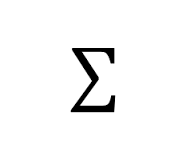
1、sum 的拉丁娘家 summus 是"最高的":古罗马人竖着算账,从下往上加,总和写在最顶上——"顶上那个数"就是总数。亲戚现成:summit(顶点、峰会)、super(在上面)、maximum(最大值)、minimum(最小值)。
2、一家派生顺下来:sum up(总结,短语动词)、summary(摘要、概要——"缩成一小块总数")、summarise/summarize(写摘要这个动作)。
3、"总数"辨析:sum 是加出来的结果(the sum of 3 and 4),total 强调一块不落的全合计,amount 偏总量大数,a sum of money 专指"一笔钱"(本义到今天)。
2、一家派生顺下来:sum up(总结,短语动词)、summary(摘要、概要——"缩成一小块总数")、summarise/summarize(写摘要这个动作)。
3、"总数"辨析:sum 是加出来的结果(the sum of 3 and 4),total 强调一块不落的全合计,amount 偏总量大数,a sum of money 专指"一笔钱"(本义到今天)。
机器生成的内容难免有错,看到不靠谱的拆解请告诉我们
词族 · sum
中文词源
sum 金额,款项,总和,总数,总结,概括
来自拉丁语 summa,阴性形式于 summus,最高的,最上面的,缩写自 PIE*sup-mos-,最上面的, 构成 super 的最高级形式,-m,最高级后缀,词源同 maximum,minimum.后形容词作名词使用, 引申词义最高点及相关词义。
英语词源
- sum
-
sum: [13] Latin summus meant ‘highest’ (a meaning preserved in English summit [15], which is ultimately derived from it); it evolved from an earlier *supmus, a superlative form based on the stem of Latin super ‘above’ (source of English super). When the Romans counted up columns of figures they worked from the bottom upwards, and put the total on top – whence the use of the expression rēs summa, literally ‘highest thing’, for ‘total’. This was eventually shortened to summa, which reached English via Old French summe. Other derivatives in English include consummate [15] and summary [15].
=> consummate, summary, summit - sum (n.)
- c. 1300, summe, "quantity or amount of money," from Anglo-French and Old French summe, somme "amount, total; collection; essential point; summing up, conclusion" (13c., Modern French somme), from Latin summa "the top, summit; chief place, highest rank; main thing, chief point, essence, gist; an amount (of money)," noun use (via phrases such as summa pars, summa res) of fem. of summus "highest, uppermost," from PIE *sup-mos-, from root *uper "over" (see super-).
The sense development from "highest" to "total number, the whole" probably is via the Roman custom of adding up a stack of figures from the bottom and writing the sum at the top, rather than at the bottom as now (compare the bottom line).
General sense of "numerical quantity" of anything, "a total number" is from late 14c. Meaning "essence of a writing or speech" also is attested from mid-14c. Meaning "aggregate of two or more numbers" is from early 15c.; sense of "arithmetical problem to be solved" is from 1803. Sum-total is attested from late 14c., from Medieval Latin summa totalis. - sum (v.)
- early 14c., "to count, count up, calculate, reckon," from Old French sommer "to count, add up," or directly from Medieval Latin summare, from summa (see sum (n.)). Meaning "briefly state the substance of" is first recorded 1620s (since c. 1700 usually with up). Related: Summed; summing.
权威例句
- 1. The sum of evidence points to the crime resting on them.
- 所有证据都表明该犯罪乃他们所为.
- 2. What are you doing fooling with such a staggering sum of money?
- 你拿着这么一大笔钱瞎折腾什么呢?
- 3. You owe a certain person a sum of money.
- 你欠某人一笔钱。
- 4. The guests had each paid £250, no trifling sum.
- 客人每位付了250英镑,可不是一笔小数目。
- 5. The sum of all the angles of a triangle is 180 degrees.
- 三角形内角总和为180度。
词语辨析
【amount, sum, number, quantity】
这组词都有“总数、总量”的意思,其区别是:
amount: 普通用词,与quantity近义,但强调整体,指把所有数量、重量及度量归并在一起得出的总数。
sum: 普通用词,指简单加算的结果。
number: 普通用词,指人或物的数目,强调数的概念。
quantity: 书面用词,指事物的总量和总数量,侧重大批计量,含准确测量的意味。
【total, whole, sum】
这组词都有“总数、全体”的意思,其区别是:
total: 指总量之大,强调每一构成部分或成分均被计算在内。
whole: 着重其中没有部分或成分被忽略不计。
sum: 指两个或更多的数目相加的总和。
这组词都有“总数、总量”的意思,其区别是:
amount: 普通用词,与quantity近义,但强调整体,指把所有数量、重量及度量归并在一起得出的总数。
sum: 普通用词,指简单加算的结果。
number: 普通用词,指人或物的数目,强调数的概念。
quantity: 书面用词,指事物的总量和总数量,侧重大批计量,含准确测量的意味。
【total, whole, sum】
这组词都有“总数、全体”的意思,其区别是:
total: 指总量之大,强调每一构成部分或成分均被计算在内。
whole: 着重其中没有部分或成分被忽略不计。
sum: 指两个或更多的数目相加的总和。