记忆方法
1、port 的义项看着散,其实只挂两条主干上:一条是"港口",一条是"搬运"。记住这两条,剩下的都是顺藤摸瓜。
2、"港口"这条:波特酒就叫 port(从葡萄牙的 Porto 港运出去的);计算机端口也是 port(进出的口子);船的左舷还是 port——船靠港时贴着码头的那一侧就是左舷。和它相对的是 starboard 右舷,这个词字面是"操舵的板",早先船桨装在右边,所以右边叫舵板。"搬运"这条一串:porter 搬运工、portable 便携的、import 进口、export 出口、deport 驱逐出境(de- 离开加 port 港口,就是让人离港)、support 支撑(在下面托着搬)。
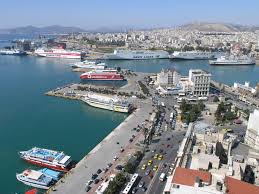
3、说"港口"的这几个词分清楚就不混:port 把城市和陆地一起算进去(port city 港口城市)、harbour 侧重能避风的水面、dock 是船停的泊位、wharf 是船靠岸装卸货的码头、pier 是垂直伸进海里、供人上下船或散步的那一段。
机器生成的内容难免有错,看到不靠谱的拆解请告诉我们
词族 · port
中文词源
port 港口,端口,船的左舷
来自拉丁语portus,港口,来自PIE*per,向前,通过,词源同ford,forth.用于航海术语左舷,即从后面掌舵位往前看朝向港口的位置,比较starboard,右舷,掌舵位。并引申计算机端口等词义。
英语词源
- port
-
port: English has no fewer than five distinct words port, all of them going back to the Latin stem port-, a descendant of the Indo-European base *por- ‘going, passage’ (from which English also gets fare, ford, etc). Based on this stem was portus ‘harbour’ (etymologically a ‘place by which one enters’), which was borrowed into English as port ‘harbour’ [OE].
It is thought that the nautical port ‘left’ [17] originally denoted the side of the vessel facing harbour. And port the drink [17] gets its name from Oporto (literally ‘the port’), the town at the mouth of the river Douro in Portugal through which port is shipped. From Latin portus was derived the verb portāre, which presumably originally meant ‘bring into port’, but by classical times had broadened out to simply ‘carry’.
This gave English the military verb port ‘carry’ [16], and also underlies deport [15], export [15], import, important, portable [14], portfolio [18] (etymologically a ‘carrier of leaves’ or papers), portly [16], portmanteau, report, and transport. Also from portus comes English opportunity. From the same stem came Latin porta ‘gate, door’, which reached English via Old French porte as port ‘gate’ [13].
It came to be applied in the 14th century to an ‘opening in the side of a ship’, and it is now most commonly encountered in the compound porthole [16]. Portal [14] and portcullis are among its descendants.
=> fare, ferry, fiord, ford; deport, export, import, important, opportunity, portable, portly, report, transport; porch, portal, portcullis, porthole, portico - port (n.1)
- "harbor," Old English port "harbor, haven," reinforced by Old French port "harbor, port; mountain pass;" Old English and Old French words both from Latin portus "port, harbor," originally "entrance, passage," figuratively "place of refuge, asylum," from PIE *prtu- "a going, a passage," from root *per- (2) "to lead, pass over" (cognates: Sanskrit parayati "carries over;" Greek poros "journey, passage, way," peirein "to pierce, run through;" Latin porta "gate, door," portare "passage," peritus "experienced;" Avestan peretush "passage, ford, bridge;" Armenian hordan "go forward;" Welsh rhyd "ford;" Old Church Slavonic pariti "to fly;" Old English faran "to go, journey," Old Norse fjörðr "inlet, estuary").
Meaning "left side of a ship" (looking forward from the stern) is attested from 1540s, from notion of "the side facing the harbor" (when a ship is docked). It replaced larboard in common usage to avoid confusion with starboard; officially so by Admiralty order of 1844 and U.S. Navy Department notice of 1846. Figurative sense "place of refuge" is attested from early 15c.; phrase any port in a storm first recorded 1749. A port of call (1810) is one paid a scheduled visit by a ship. - port (n.2)
- "gateway," Old English port "portal, door, gate, entrance," from Old French porte "gate, entrance," from Latin porta "city gate, gate; door, entrance," from PIE root
权威例句
- 1. He asked for a glass of port after dinner.
- 晚饭后,他要了一杯波尔图葡萄酒。
- 2. They had asked Hong Kong for permission to put into port there.
- 他们请求香港允许他们在那里入港停留。
- 3. Captain David Clement and 150 commandos stormed the port this morning.
- 戴维·克莱门特上尉和150名突击队员今天早上对港口展开突袭。
- 4. When they first captured the port, they virtually cleaned out its warehouses.
- 他们刚占领港口时,把那里的仓库简直抢了个精光。
- 5. The trawler had sailed from the port of Zeebrugge.
- 拖网渔船已经驶离了泽布吕赫港。
词语辨析
【port, harbor, dock】
port: 重心在陆地,包括其所在的城市,port city
harbor: 重心在水,指停泊船只、装卸货物的天然或人工港口,为避风港湾
dock: 码头
【port, seaport, harbour, pier, wharf】
这组词都有“港,港口,码头”的意思,其区别是:
port: 多指人工港口,还可指有港口的市。
seaport: 指港埠。
harbour: 一般用词,指停泊船只、装卸货物的天然或人工港口。
pier: 专指与海岸成直角形而突出的码头,可供旅客,货物上下船或供人散步用。
wharf: 指船只停泊装卸货物的码头。
port: 重心在陆地,包括其所在的城市,port city
harbor: 重心在水,指停泊船只、装卸货物的天然或人工港口,为避风港湾
dock: 码头
【port, seaport, harbour, pier, wharf】
这组词都有“港,港口,码头”的意思,其区别是:
port: 多指人工港口,还可指有港口的市。
seaport: 指港埠。
harbour: 一般用词,指停泊船只、装卸货物的天然或人工港口。
pier: 专指与海岸成直角形而突出的码头,可供旅客,货物上下船或供人散步用。
wharf: 指船只停泊装卸货物的码头。