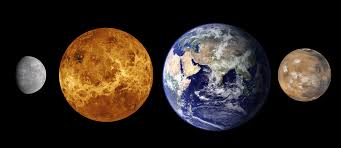
词族 · planet
词形变化
派生词
中文词源
planet 行星
来自希腊语asteres planetes,移动的星星,行星,来自planesthai,移动的,漫游的,可能来自来自PIE*pele,展开,放平,词源同plan,place.
英语词源
- planet
-
planet: [12] A planet is etymologically a ‘wanderer’. The word comes via Old French planete and late Latin planēta from Greek planétos, a derivative of the verb planasthai ‘wander’. This was applied to any heavenly body that appeared to move or ‘wander’ across the skies among the fixed stars, which in ancient astronomy included the sun and moon as well as Mars, Venus, etc. The modern application to a ‘body that orbits the sun (or similar star)’ dates from the mid 17th century.
- planet (n.)
- late Old English planete, from Old French planete (Modern French planète), from Late Latin planeta, from Greek planetes, from (asteres) planetai "wandering (stars)," from planasthai "to wander," of unknown origin, possibly from PIE *pele- (2) "flat, to spread" on notion of "spread out." So called because they have apparent motion, unlike the "fixed" stars. Originally including also the moon and sun; modern scientific sense of "world that orbits a star" is from 1630s.
权威例句
- 1. The blue whale is the largest living thing on the planet.
- 蓝鲸是地球上体型最大的生物。
- 2. The chances of a planet surviving a supernova always looked terribly slim.
- 行星躲过超新星爆发的几率总是十分渺茫。
- 3. The planet is probably in orbit around a small star.
- 这颗行星可能正环绕着一颗小恒星运行。
- 4. The new planet is about ten times the size of the earth.
- 新发现的行星大约是地球的10倍那么大。
- 5. The planet Mars will be visible to the naked eye all week.
- 整周都可以用肉眼观察到火星。
词语辨析
【planet, star】
这组词都有“星”的意思,其区别是:
planet: 指围绕太阳运转的行星。
star: 多指恒星,也指天空中的群星。可引申指一切星状物或文体等领域中的知名人物。
这组词都有“星”的意思,其区别是:
planet: 指围绕太阳运转的行星。
star: 多指恒星,也指天空中的群星。可引申指一切星状物或文体等领域中的知名人物。