记忆方法
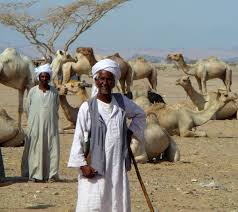
将“nomad”分解为“no ma-d”。想象“no”是“没有”的意思,而“ma-d”像是“妈妈”的名字,这样就容易记住这个单词指的是像“没有固定居所的妈妈”一样,四处漫游的游牧民族。
机器生成的内容难免有错,看到不靠谱的拆解请告诉我们
词族 · nomad
词形变化
中文词源
nomad 游牧民族
来自希腊语nomos,牧场,放牧,来自PIE*nem,分配,分开,词源同number,nemesis.用于指分配的草地,游牧,游牧民族。
英语词源
- nomad
-
nomad: [16] The Greek verb némein had a very wide range of senses. It originally meant ‘deal out, dispense’, a signification mirrored in the derived nemesis [16] (etymologically the ‘dealing out’ of what is due) and the possibly related number. It developed subsequently to ‘inhabit’ and to ‘control, manage’ (which is represented in English economy).
But a further strand was ‘put out to pasture’; and from the same stem as produced némein was formed the adjective nomás ‘wandering about to find pasture for herds or flocks’. Its plural nomádes was used to denote pastoral people who lived in this way, and the word was passed on via Latin nomades and French (singular) nomade into English.
=> economy, nemesis - nomad (n.)
- 1550s, from Middle French nomade (16c.), from Latin Nomas (genitive Nomadis) "wandering groups in Arabia," from Greek nomas (genitive nomados, plural nomades) "roaming, roving, wandering" (to find pastures for flocks or herds), related to nomos "pasture, pasturage, grazing," literally "land allotted," from PIE root *nem- "to divide, distribute, allot" (see nemesis).
权威例句
- 1. He was a patriarchal Semitic nomad.
- 他是族长制闪米特游牧部落的一员.
- 2. He was indeed a nomad of no nationality.
- 他的确是个无国籍的游民.
- 3. At this stage, I started to work on the nomad's wife.
- 在这个阶段我开始画牧民的妻子.
- 4. The bug showing multiple nomad invasions warn has been fixed.
- 表现侵犯警告的多样游牧民族的虫已经被修理.
- 5. I think these devices facilitate our inner digital nomad.
- 我认为这些设备丰富了我们的数字生活.