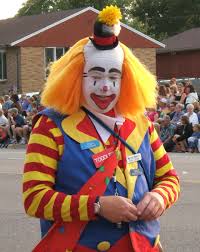
记忆方法
【记法】分解为:cl(丑陋)+own(自己:one's own).
【联想】小丑为了取得观众的欢笑,常常丑化自己.
【联想】小丑为了取得观众的欢笑,常常丑化自己.
看到不对的地方请告诉我们
词族 · clown
中文词源
clown 小丑
可能来自clod,大块,笨拙。
英语词源
- clown
-
clown: [16] Clown’s antecedents are obscure. Its earliest recorded sense is ‘unsophisticated or boorish country fellow’, which has led to speculation that it may come ultimately from Latin colonus ‘colonist, farmer’ (residence in the country often being associated with backwardness or lack of sophistication, as in the case heathen and pagan). Others, however, see a more direct source in a Germanic language from the Low Countries or Scandinavia: North Frisian klönne and Icelandic klunni, both meaning ‘clumsy person’, have been compared.
- clown (n.)
- 1560s, clowne, also cloyne, "rustic, boor, peasant," origin uncertain. Perhaps from Scandinavian dialect (compare Icelandic klunni "clumsy, boorish fellow;" Swedish kluns "a hard knob; a clumsy fellow," Danish klunt "log, block"), or akin to North Frisian klönne "clumsy person." Or, less likely, from Latin colonus "colonist, farmer," though awareness of this word might have influenced the sense development in English.
Meaning "professional fool, professional or habitual jester" is c. 1600. "The pantomime clown represents a blend of the Shakes[pearean] rustic with one of the stock types of the It. comedy" [Weekley]. Meaning "contemptible person" is from 1920s. Fem. form clowness attested from 1801. - clown (v.)
- c. 1600, "to play the clown onstage," from clown (n.); colloquial sense of "to behave inappropriately" (as in clown around, 1932) attested by 1928, perhaps from theatrical slang sense of "play a (non-comical) part farcically or comically" (1891). Related: Clowned; clowning.
权威例句
- 1. He was laughing, the clown of the twosome.
- 他在笑,二人搭档中逗人乐的那个。
- 2. The moment the clown appeared on stage, the audience folded up.
- 小丑一出现在舞台上, 观众们个个笑得前俯后仰.
- 3. The star clown was considered a master of witty banter.
- 那丑星被认为是个逗乐子的好手.
- 4. Each clown capped the last joke of the other.
- 丑角的笑话一个比一个好.
- 5. The boy plays the clown to get attention.
- 那男孩作出滑稽的动作以便引人注意.